
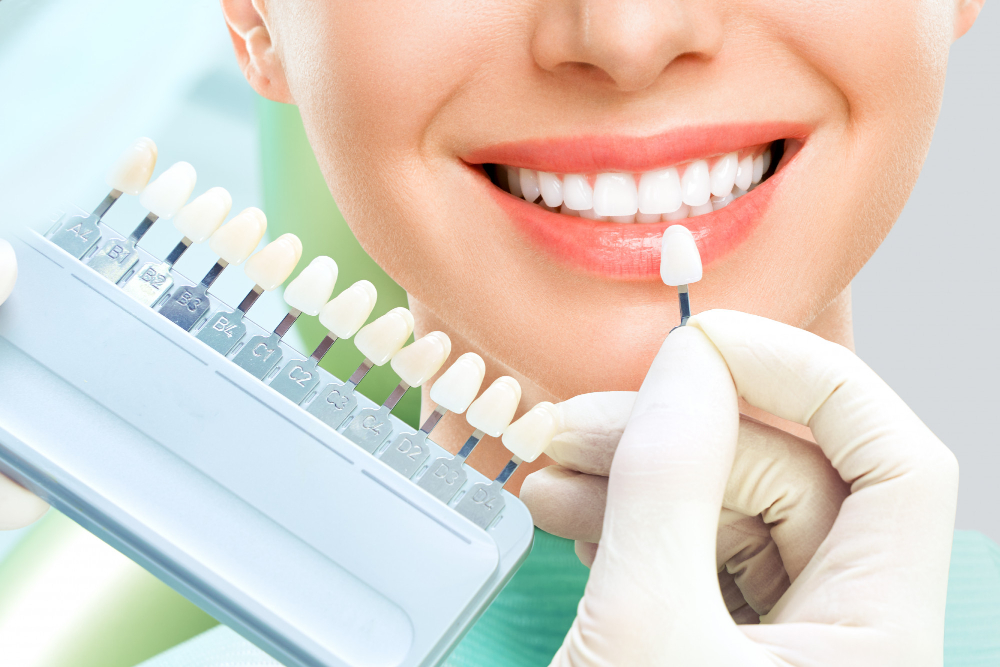
Dental veneers are thin covers placed on the front of teeth. They help improve the look of your smile. Many people choose dental veneers to fix chipped, stained, or uneven teeth. In this blog, you will learn what dental veneers are, their benefits, the dental veneer procedure, possible risks, and how to care for dental veneers. If you are thinking about dental veneers in your area, this guide will help you decide.
What Are Dental Veneers?
First, dental veneers are thin shells made from porcelain or resin. Dentists bond them to the front of your teeth. Because they look like natural teeth, veneers can quickly improve your smile. Most often, people choose porcelain dental veneers because they last longer and resist stains better than resin types.
Usually, dental veneers are used to fix:
According to the American Dental Association, veneers are a safe and effective way to enhance your smile.
Benefits of Dental Veneers
Dental veneers offer many benefits. For example, they can make your teeth look whiter and straighter. Also, they can cover small chips or cracks. Here are some key benefits:
In addition, dental veneers can boost your confidence. Many people feel happier with their smile after getting veneers.
Who Is a Good Candidate for Dental Veneers?
Not everyone is a good fit for dental veneers. However, you may be a good candidate if you:
Still, your dentist will check your teeth and discuss your goals. Sometimes, other treatments may work better for you. For example, if you have severe tooth decay, you may need a different solution.
The Dental Veneer Procedure: Step-by-Step
The dental veneer procedure usually takes two or three visits. Here is what you can expect:
Because the dental veneer procedure is simple, most people return to normal activities the same day.
Risks and Potential Side Effects of Dental Veneers
While dental veneers are safe, there are some risks. For instance, you may feel tooth sensitivity after the procedure. This usually fades in a few days. Other possible risks include:
According to dental journals, these risks are rare when you choose a skilled dentist. Still, it is important to know all possible side effects before you decide.
Aftercare Tips for Dental Veneers
Proper care helps your dental veneers last longer. Here are some tips on how to care for dental veneers:
With good care, porcelain dental veneers can last 10 to 15 years or more. However, if you notice any problems, contact your dentist right away.
Frequently Asked Questions About Dental Veneers
How much do dental veneers cost?
The cost of dental veneers varies by location and material. On average, porcelain dental veneers cost more than resin ones. Your dentist can give you an exact price.
Do dental veneers hurt?
Most people feel little to no pain during the dental veneer procedure. Some may have mild sensitivity for a few days.
Can dental veneers be removed?
No, dental veneers are permanent. Because enamel is removed, you will always need a cover on that tooth.
How long do dental veneers last?
With proper care, porcelain dental veneers can last up to 15 years. Resin veneers may last 5 to 7 years.
Are dental veneers right for everyone?
Not always. Your dentist will help you decide if veneers are the best choice for your needs.
In summary, dental veneers can give you a brighter, more even smile. However, it is important to weigh the benefits, risks, and costs. Consult a qualified dentist at Smile Care Dental Specialities to find out if dental veneers are right for you.