
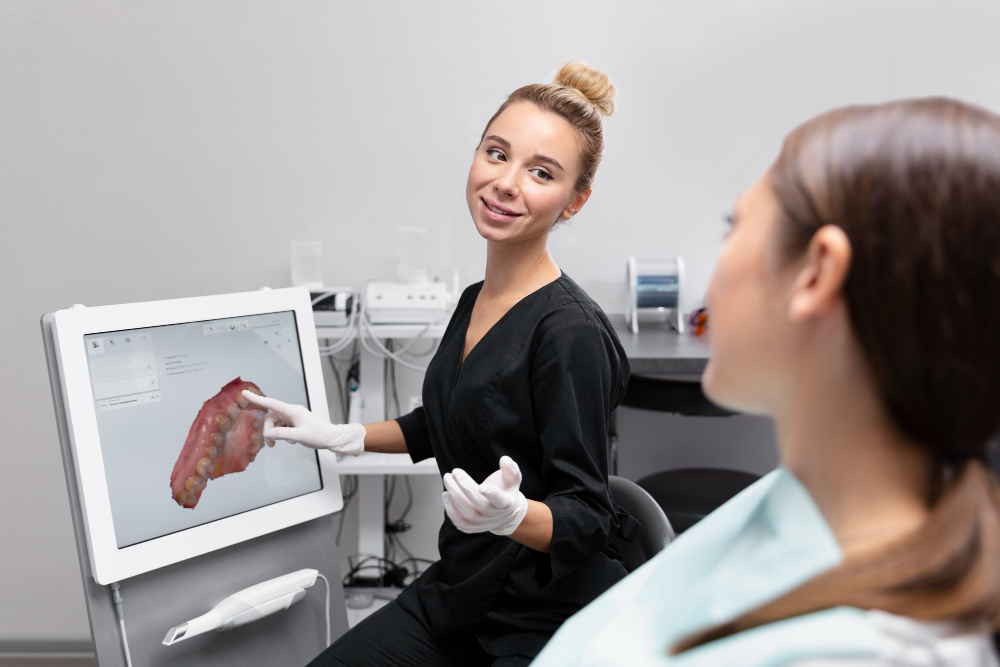
What Are Intraoral Scanners?
Intraoral scanners are small, handheld devices used in digital dentistry. They create a 3D image of your teeth and gums. Dentists use these scanners instead of traditional dental molds. As a result, digital dental impressions are now faster and more comfortable for patients. In many dental clinics, intraoral scanners are part of the latest digital dentistry technology.
How Do Intraoral Scanners Work?
First, the dentist gently moves the scanner inside your mouth. The scanner uses light to capture thousands of pictures of your teeth. Then, special software combines these images into a detailed 3D model. Because the process is quick, you do not need to bite into messy putty. Instead, the digital dental impression appears on a computer screen in real time.
Key Benefits of Intraoral Scanners
Intraoral scanners offer many advantages for both patients and dentists. For example, they make dental visits easier and more pleasant. Here are some key benefits of intraoral scanners:
The Intraoral Scanning Process: What Patients Can Expect
Many patients wonder what happens during an intraoral scan. Usually, the process is simple and painless. Here is what you can expect:
Because there is no need for dental putty, most people find this process much more comfortable. In addition, you can return to your normal activities right away.
Are Intraoral Scanners Safe?
Yes, intraoral scanners are safe for most people. They use light, not X-rays, so there is no radiation. According to dental experts and the World Health Organization, digital dentistry technology like intraoral scanners is safe and effective. However, if you have special concerns, always talk to your dentist first.
Frequently Asked Questions
Conclusion and Next Steps
In summary, intraoral scanners are changing the way dentists take impressions. They offer comfort, speed, and accuracy for patients. Because digital dentistry technology is growing, more clinics now use these scanners every day. If you want to know if intraoral scanners are right for you, consult Smile Care Dental Specialities for personalized advice.